Search engine optimization (SEO) is the art and science of driving targeted traffic to your website from search engines. Common tasks associated with SEO include creating high-quality content, optimizing content around specific keywords and building backlinks.
If you have a website, search engine results matter. When your pages has higher rankings, this will enable more people to find you. The key to higher rankings is making sure that your website has the content that meets the search engines algorithms standards of relevance and quality.
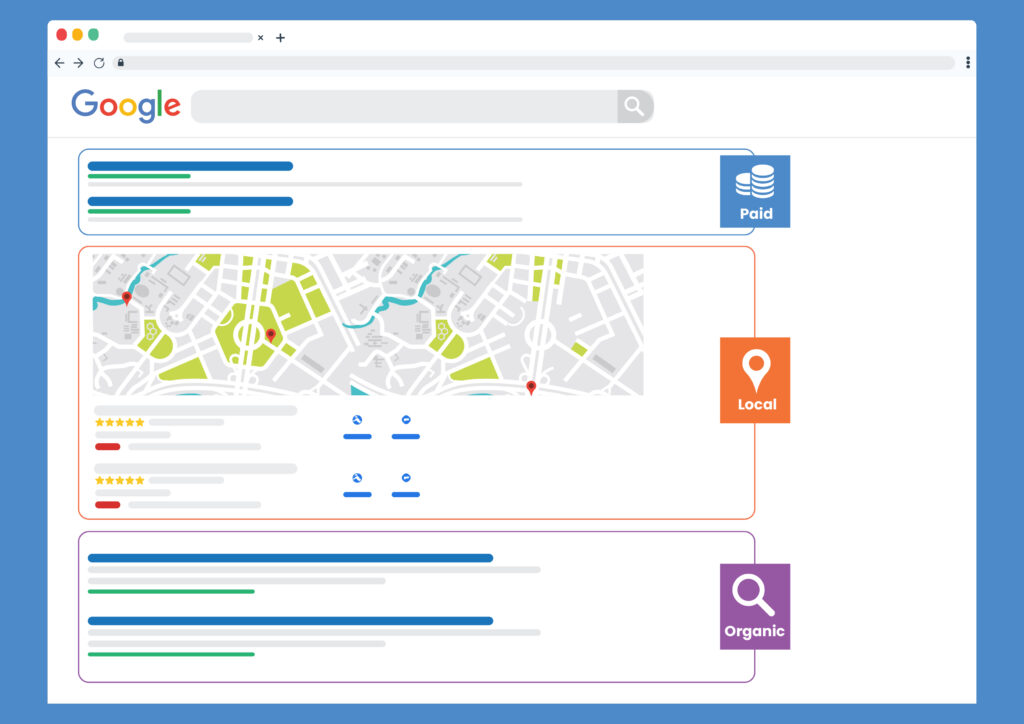
Using Google as an example, when you search for something, the Search Engine Results Page shows you two distinct sections: Paid and Organic
Paid Search Results
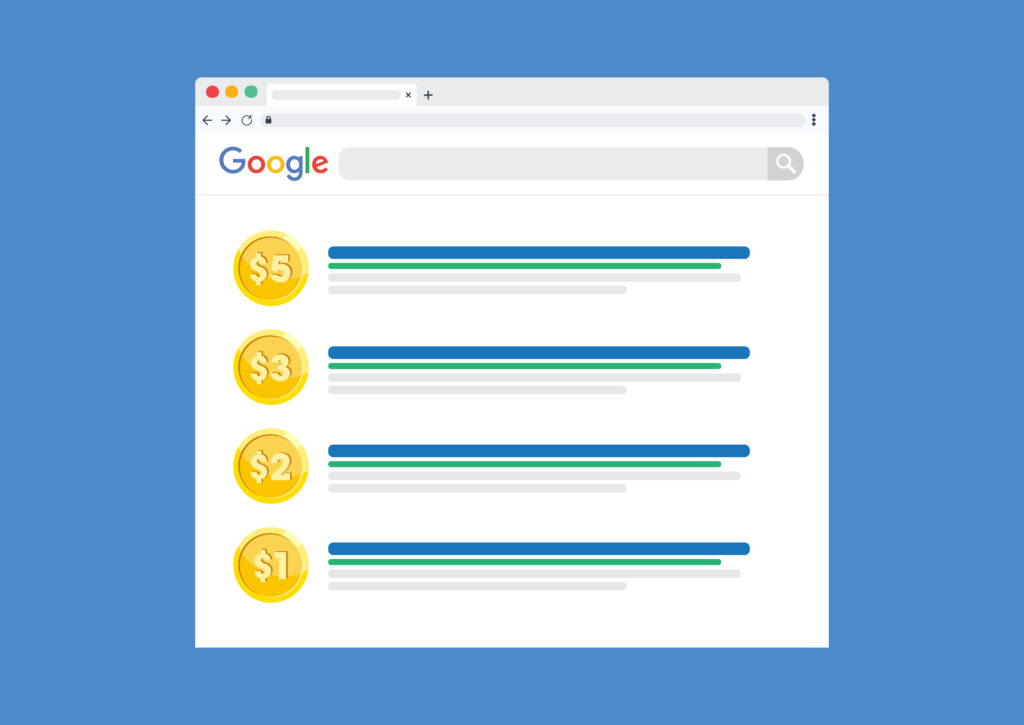
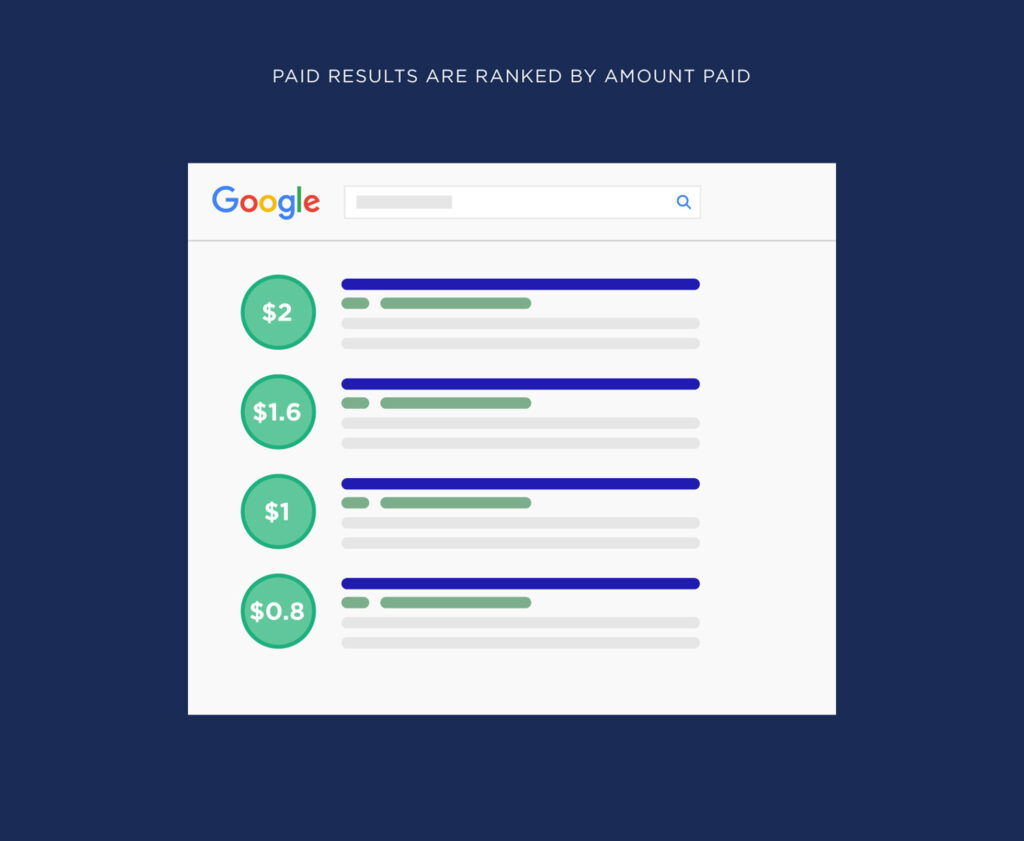
The paid results are from advertisers bidding on keywords via Google Ads. The advertisers are ranked by how much they’re willing to pay for each visitor. Although relevancy is taken into account, the placement of the paid result is dependent on increase bidding (Pay Per Click).
Local Search Results
Local search results describe the results that show up for a local-based query based upon where the customer is. Local search results usually include a local pack containing the three physical locations Google deems most relevant to the keyword..
Organic Search Results
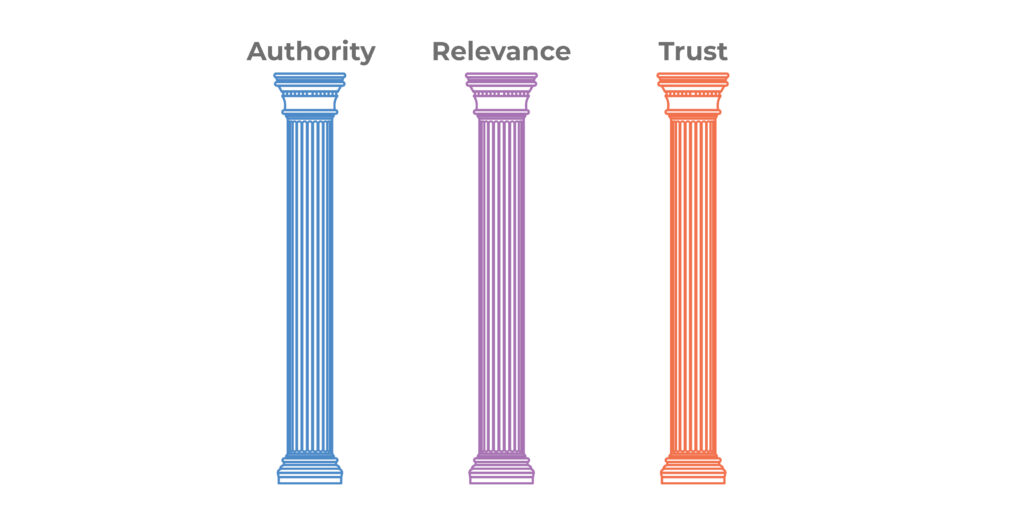
Whereas you can spend money to get a higher ranking through Paid Search, Organic results (ansi called “natural”) are based on hundreds of differering factors that are grouped under the heading of SEO. Some of these factors can be categorized into authority, relevance and trust.
Authority
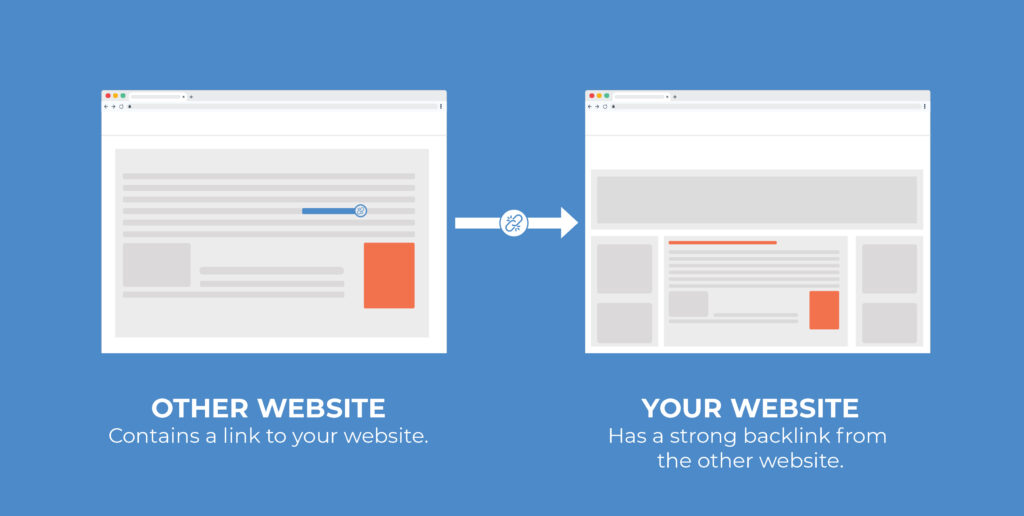
Authority is Google’s way of determining if the content is accurate and trustworthy. The best way to become an authoritative voice is to create content that answers frequently asked questions in your space and become an expert in your niche. When you do this others will want to listen to what you have to say and link to you. In general the more links a page has, the higher it will rank.
Relevance
The better the content matches the search query, the more relevant it is, the more likely it will achieve a higher ranking.
Trust
The trust factor in Google is a combination of many factors that they use to apply a value of how trustful a site is. The more trustful a site is seen, the more likely its articles will be ranked higher on specific searches in Google.
There are three main categories to SEO: On-Page SEO, Off-Page SEO and Technical SEO.
On-page SEO
On-page SEO (also known as “on-site” SEO) is the act of optimizing different parts of your website that affect your search engine rankings. It’s stuff that you have control over and can change on your own website.
Off-page SEO
Of-page SEO (also known as “of-site” SEO) is the act of optimizing elements on your website, like the site performance, and keyword density, versus factors outside your website, like backlinks and social media engagement.
Technical SEO
Technical SEO refers to optimizing your site for crawling and indexing as well as any technical process meant to improve search visibility.
For infographic:
Technical SEO: Focused on how search engine spiders can crawl on your site and index your content.
On-Page SEO: Involves optimizing your content for relevant key words and delivering a positive ‘user experience’ to visitors.
Off-Page SEO: Involves building backlinks from relevant and authoritative websites that act as an independent ‘vote of confidence’, which increases your trust & authority.
E-A-T
E-A-T (short for “Expertise, Authority and Trustworthiness”) is something that Google has put more and more emphasis on over the last few years.
Why?
It’s simple: Google wants to be 100% confident that the content in the search results can be trusted.
There’s a lot of controversy in the SEO world right now about E-A-T. But the bottom line is that, for Google to give your site a high E-A-T rating, it needs to be considered trusted authority in your industry.
For example, Wikipedia probably has the highest E-A-T rating of any website on the planet. The content is written and edited by thousands of people (many of which are experts in their field).
When it comes to improving E-A-T, there really are no shortcuts. If your site puts out generic content written by random freelance writers, it’s going to be hard to establish E-A-T.
But if you put out high-quality content written by respected experts, your E-A-T is going to be in good shape.
Plus, like most things in SEO, even E-A-T is influenced by links. In fact, Google recently confirmed that PageRank is a big part of establishing E-A-T.